
Forthcoming Book | Coming 2027
Dyslexia Nation:
Where Every Child Learns to Read
What happens when we stop seeing literacy failure as a problem with the child and start looking at the system around them?
Dyslexia Nation explores the far-reaching impact of literacy on confidence, well-being, education, and opportunity, and asks what becomes possible when every learner is given the right support.
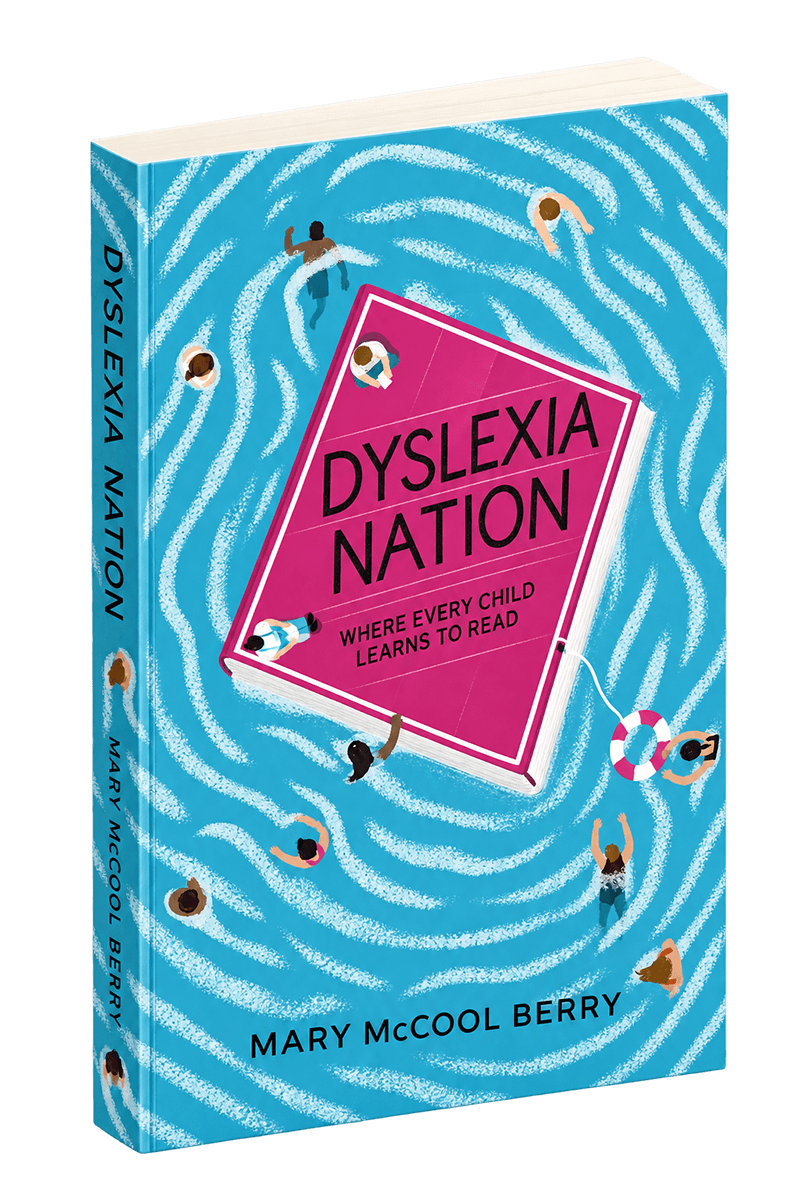
When a nation fails to teach its people to read, it fails its people’s wellbeing.
Why this book?
Nearly one in five people has dyslexia. For decades, dyslexia have been understood as a brain-based, lifelong learning difference. Yet children are still identified too late, families still struggle to access appropriate support, and evidence-based literacy instruction remains inconsistent.
The consequences can stretch far beyond school.
- \Confidence & self-worth
- \Anxiety & wellbeing
- \School engagement
- \Future opportunities
- \Family-school trust
- \The next generation
Literacy for ALL is achievable. When dyslexia is identified and the right teaching is provided the story can change.
A Different Framework
The Dyslexia Nation Method™
Five principles for moving from “wait to fail” towards early identification, effective teaching and meaningful accountability.
01
Naming It Early
You cannot intervene in what you refuse to name.
Dyslexia is neurobiological, genetic and lifelong. Early screening, identification and intervention matter because delay can have consequences not only for literacy development, but also for confidence, trust and wellbeing.
02
Teaching the Brain
Evidence is not optional.
Children with dyslexia need structured, explicit and systematic literacy teaching, informed by data and delivered with expertise. The method emphasises that the quality and fidelity of instruction matter just as much as the programme being used.
03
Counting the Cost
Literacy outcomes are wellbeing outcomes.
Reading difficulties can affect far more than test results. Anxiety, shame, school avoidance, disengagement and reduced opportunity can all become part of the story when literacy needs are not met effectively.
04
Rebuilding Trust
Results, not reassurance.
Trust between families and schools can erode when children continue to struggle despite effort and support. Rebuilding that trust depends on meaningful action, effective intervention and visible progress.
05
HOLDing SYSTEMS To Account
Children do not fail systems. Systems fail children.
The Dyslexia Nation Method™ looks beyond the individual learner to the wider system: teacher preparation, legislation, implementation and accountability. It calls for literacy to be treated not simply as an educational service, but as a civil and human right.
06
Vision · Building the Nation That Reads
A literate nation is a choice.
Other states and nations have already shown that large-scale change is possible. This principle sets out what it will take, from policy to classrooms, to make universal literacy a national commitment rather than a hope.
Teach someone to read and the effect doesn’t stop there…
Literacy
Learning to read opens the door to understanding, expression, and independence.
Confidence
As reading becomes less of a struggle, self-belief begins to grow.
Well-Being
Greater confidence and less frustration have a powerful effect on emotional health.
Participation
When literacy is no longer a barrier, children and adults can engage more fully in education, work, and everyday life.
Opportunity
Strong literacy skills widen access to further education, employment, and the choices available throughout life.
The impact of literacy reaches far beyond the page.
Inclusion cannot exist without literacy.
And well-being cannot exist without inclusion.
Teaching people to read is not simply an academic goal.
It determines who gets to participate fully in society.
For children with dyslexia, the right teaching can replace years of frustration and self-doubt with independence, self-belief, and engagement, and those effects carry well beyond the classroom.
Read an Excerpt from Dyslexia Nation
From Chapter 7, “The Man Who Forgot His Glasses”
At 4:45 in the morning, the packaging hall of one of America’s largest breweries is already louder than most people’s entire day. Bottles rattle down the line like applause that never stops.
Dale has worked this floor for thirty-four years. He can tell by sound alone when a filler head is running rich or when a labeler is a half-second out of time. Machines talk to him, and he listens. It is the paper that stays silent.
This morning, there is a new sheet on the board by the clock—a revised lockout-tagout procedure, three paragraphs, and a signature line at the bottom. Dale stands in front of it a beat too long, the way a man stands in front of a door he does not have the key to. Then he pats his shirt pocket, laughs at himself, and turns to the kid next to him.
“Forgot my glasses again. What are they crying about now?”
The kid reads it aloud. Dale nods along, asks one sharp question about the valve sequence—a better question than anyone else on the shift would think to ask—and signs his name, one of maybe a dozen words his hand knows by heart. The whole exchange takes ninety seconds. He has been performing some version of it for thirty-four years.
There are no glasses. There never were.
Who is this book for?
For parents who have been told to “wait and see,” and who know in their hearts that something isn’t right.
For teachers who were never trained to teach reading the way the brain learns, and who want to reach every child in the room.
For school and district leaders ready to replace good intentions with results families can see.
For policymakers and advocates who believe literacy is a civil right and want a blueprint for making it real.
For journalists and researchers covering literacy, equity, and education policy.
For adults with dyslexia who were failed by the system and deserve to know it was never their fault.
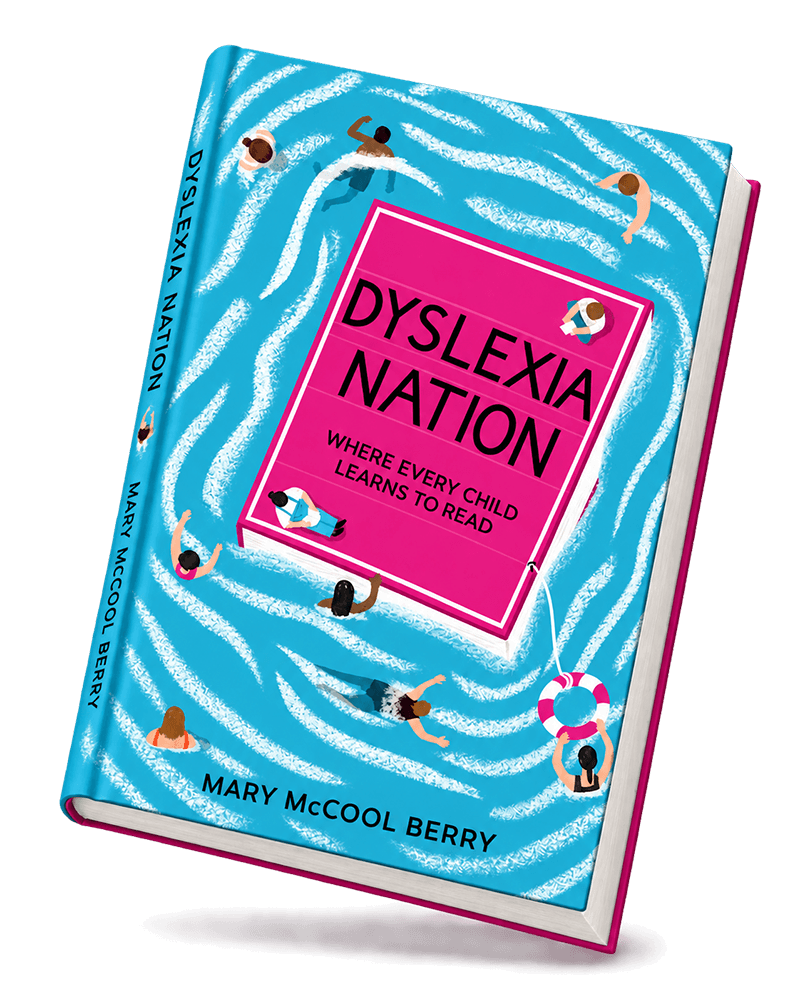
What you’ll learn inside…
- How to recognize the early signs of dyslexia, and the questions to ask when a school says to "wait and see"
- What structured, evidence-based reading instruction looks like, and why phonics alone is not always enough
- The hidden costs of unaddressed dyslexia: emotional, financial, and generational
- How families and schools can rebuild trust through action instead of reassurance
- Why identification still falls along lines of race and income, and what it will take to close that gap
- Lessons from places that turned literacy around, from Mississippi to New Zealand
- A six-part policy blueprint, with clear roles and measures, for building a nation that reads

About the author
Mary McCool Berry, M.Ed. Reading K-12
Wilson Certified Dyslexia Therapist · Dyslexia Advocate · Host of the Teach Someone to Read podcast · Author of Dyslexia Nation (2027) and International Speaker
After 32 years in public education and another 7 years in dyslexia clinical practice, Mary McCool Berry has seen what happens when children are given the right support, and what can happen when they are not.
As a teacher, educational leader, dyslexia therapist, advocate, and speaker, she has worked alongside children, adults, families, schools, and organizations facing the consequences of literacy difficulties.
Again and again, she has seen reading struggles affect far more than academic progress, shaping confidence, mental health, relationships with school, and future opportunity.
Dyslexia Nation brings those experiences together with the evidence on dyslexia and effective literacy instruction. Mary’s aim is not simply to describe what is going wrong.
It is to show that a different outcome is possible when dyslexia is identified, evidence-based teaching is provided, and systems are prepared to take responsibility.
Because literacy failure is not inevitable, and neither are its consequences.
Be the first to know
Dyslexia Nation is coming.
Join the list for launch news, preorder details, and an exclusive early excerpt from Dyslexia Nation.
Your email stays private. Unsubscribe anytime
More from Mary
Book Mary to speak
Conferences, school districts, and policy events
Get help now
Advocacy support for families navigating special education – Get in touch